Showing posts with label Crime Fiction. Show all posts
Thursday, 30 June 2016
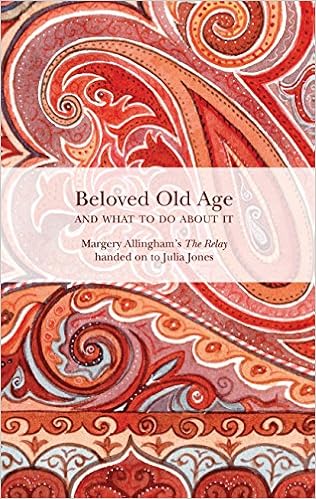
Beloved Old Age - and what to do about it, by Julia Jones and Margery Allingham (publ. Golden Duck)
This is a really unusual book which defies genre boundaries, usually a recommendation in itself. Julia Jones is the biographer of Golden Age crime queen Margery Allingham and as such, has been lucky enough to be entrusted with access to her documents. Among them was an oddity, Allingham's very last book, unpublished, and a departure from her popular murder mysteries. 'The Relay' is about ageing, the problems of ageing, and how to deal with them within the family. Julia Jones has prepared this book for publication but added an enriching layer to it, in interweaving her own account of living with her mother's dementia and the changes it dictates to their and their family's lives. How to deal with ageing - now a hot topic with greater longevity, though there were plenty of tough old birds male and female who'd survived childhood infections and went on living a long long time. Margery had a very highly developed sense of responsibility and though a highly successful novelist, she ended up supporting a useless git of a neither use nor ornament husband and various other family members and hangers-on, while writing her heart out to outrun tax demands and keep them all in the style to which they felt entitled to become accustomed. Still, she never seems to have considered ditching the old dears but ended up evolving a system to enable 'the relay' to continue. By this she means, allowing the experience, wisdom, stories and any other accumulated life material to be absorbed into the family before the old depart.
Uniquely in my experience, she writes of looking after one's own family oldies as a privilege, and a vital part of the family, not just a duty or a burden, though she acknowledges the enormous stresses involved. Poor Margery seems to have had a nasty mother who enjoyed putting her down, but even she gets taken in. So Margery and her sister set up a home for their mother, and two aunts, in a cottage over the road. Margery calls this system a 'dower house' system which nowadays makes it all sound very posh and upper class, but she was referring to an old tradition whereby the older generation live out their days in a nearby house, with support from family. What we'd now perhaps call a 'granny annex' which is patronising rather than posh, not much of an improvement vocab-wise. With great honesty, she describes how to set up such a system - it's vital to have someone professional looking after them, a housekeeper/home help, to take some of the personal stress from family. I was much struck with the points she made, back then when almost everyone had servants who wasn't one, that this person's salary should be the largest part of the expenditure by far, and they should have adequate time off covered by family members. So many people now who work caring for elderly people are on minimum wage. We have no respect for carers either family struggling alone or paid carers.
This would be interesting in itself as a book, but Julia Jones has added her own experiences and her personal responses to her own 'relay race' with her mother in journal-like entries which comment on Margery's writing too. Many many of us have had to cope with forms of dementia and other disabilities in our older loved ones. Julia writes with searing honesty of when she struggles to cope, when she loses patience, and also of the joys and humour and special moments of intimacy they share. Julia has been co-running 'John's Campaign' with Nicci Gerrard, to fight for the rights of those with dementia to have family or carers with them in hospital to preserve their identities and care for them properly. We still have a long way to run in this race, and this book is fascinating, moving, beautifully written by both Margery and Julia, and really thought-provoking. Sadly, Margery died aged just over 60, worn out, and so didn't become the dowager herself, but her writing passes on the baton of her creativity and thoughts to us now that Julia Jones has written this book and edited Margery's part of it.
I kept wanting to carry on the 'relay', reply to Julia's meditations on Margery's chapters sparked memories of how I coped with my mother's dementia and the research I did into neuroscience to write poetry about it. Perhaps the book could be blogged one day with the facilities for people to add their own wisdom and experience of being old, and being the next one down waiting for the baton. Claudia Myatt who designed the beautiful cover wrote a very moving song about Julia's mum, and so we share our voices and our experiences and express them in art.
Valerie Laws
Labels:
ageing,
carers,
caring,
Crime Fiction,
dementia,
dower house,
eBook,
family,
GoldenDuck,
john's campaign,
Julia Jones,
Kindle,
Margery Allingham,
nicci gerrard,
old age,
paperback,
relay,
The Relay,
wisdom
Friday, 12 February 2016
Black by Rose by Andrew Barrett: reviewed by Chris Longmuir
Black by Rose was a real page turner of a book. It follows
several plot lines, and at times I found it difficult to figure out who the
main characters were. This was not helped by a prologue that featured a murder
for which a woman deliberately takes the blame and serves time in prison to
protect her female lover. This plot line then lapses and does not return until
much later in the book.
After the prologue the plot features on the murder of an undercover
policeman and his family. During the course of the investigation we meet the
forensics team, the police and a particularly vicious criminal family. I liked
the multi-viewpoint style which allowed me to see into the minds of all of
these.
However, the characters who really drew me in were Eddie and
Ros and the obstacles to their love for each other. They are both part of the
investigation and work in a forensics team with the police.
This is nail-biting stuff, action packed, full of pace and
suspense. If it had a fault it was only the delay between the events in the
prologue and the follow up of that part of the story.
Chris Longmuir
You can find the book at:-
Sunday, 30 August 2015
Silent Scream by Angela Marsons
Reviewed by Chris
Longmuir
Silent Scream is a thrilling read. It’s an edge of the seat,
page turner that kept me engrossed from the first page.
It starts off ten years in the past with five figures
forming a pentagram round a freshly dug grave which is not adult sized.
Ten years later a disparate group of people are being killed
by a serial killer. It takes time to identify the connection between them which
is a burnt out children’s home. The murder victims are all former workers at
this establishment. The story develops further when graves are discovered in
the field next to the former children’s home, and the mystery becomes one of
past and present.
The main character, Detective Inspector Kim Stone, is an
offbeat young woman, brought up in the care system who has many ghosts of her
own to conquer, including a paranoid shizophrenic mother, and a brother who
died due to his mother’s neglect. Needless to say this investigation is one
with particular resonations for her, and she is driven by the need to solve it.
There are many twists and turns along the way, and I must admit I didn’t see
the final twist coming, although I’m quite good at spotting these.
I can’t say any more, other than this is a great read.
Chris Longmuir
Get Silent Scream at Amazonco.uk
or Amazon.com
Sunday, 23 August 2015
No Rest For the Dead by Jeffrey Deaver, David Baldacci, Alexander McCall Smith, Kathy Reichs et al
Reviewed by Chris Longmuir
It was curiosity that led me to
this book. Why? Because It is a crime novel written by twenty six different
crime writers, all of them best sellers, and many of them my favourite authors.
When I discovered the book it set me wondering what kind of novel a multitude
of writers would produce, and how would each author's style contribute to the
whole when there was such a variety of writing styles.
It is fair to say I read this book
in a different way. Normally I would engross myself in the story, not
interesting myself in stylistic issues, unless of course they grated. However,
with this book I was conscious of each author's style and was giving
consideration to how these contributed to the story, and was it in any way
detrimental.
There were, of course, differences
in style, although these were not obtrusive, and the story flowed well from the
start. However, I was astonished when I noticed at least two of these authors
indulged in head hopping in all of their scenes.
The story focuses round a woman
who was executed for the murder of her husband ten years previously. The cop
(it's set in the U.S.) is convinced she was innocent and sets out to look for
the evidence to prove it. The book features an intriguing set of characters,
and although they are well developed I found it difficult to relate to any of
them, perhaps because the development was being done by different writers. Some
characters appeared in the early part of the book and then vanished, again
probably due to the way the book was being written. But the storyline was good
and the plot well developed with each writer following on from where the
previous writer had left off. The style of each chapter did vary a bit with
some chapters passive and others so pacy it made my heart thump. But there was
nothing so different that if I'd been reading the book in a different way would
have caused me to stop reading.
My verdict? I like the book, I
liked the story, and as an experiment in writing I would say it was successful.
Chris Longmuir
Get the book at Amazon.co.uk
or
Amazon.com
Tuesday, 5 May 2015
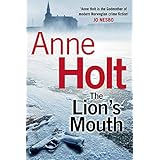
The Lion's Mouth by Anne Holt reviewed by Julia Jones
The Lion's Mouth is not like that at all. It's set in the political heart of Oslo with scrupulous descriptions of politician's offices, newspaper offices and several individual homes. There's scarcely a frozen waste to be seen. Admittedly one dodgy character dies in an avalanche and another swims naked across a lake but the subliminal message of the book is that these are the aberrants, these people and their landscapes are where civilisation and common humanity is not. The meaningful heartbeat of life lies in the city.
There is a striking (and welcome) absence of gore in The Lion's Mouth. It's more a novel of detection than a thriller and has many of the characteristics of a locked room mystery. John Dickson Carr is referenced early on. There are clues – a lost pass, an absent shawl, a filched pillbox and a gun of strikingly unusual design. These are spaced very effectively through the novel keeping the sense of action going without the need for repeated violence. This is not, however, an arid read. Alibis are established without too much minutiae and some of the clues turn out not to matter after all – or rather they matter in the field of human personality and relationships, not criminal investigation.
The Lion's Mouth is a political novel and here Ann Holt writes with effortless authority. She is a lawyer who has worked for the Norwegian Broadcasting Corporation, the Oslo Police Department and served as Minister of Justice for a few months before ill-health forced her to resign. The Lion's Mouth is written in collaboration with her former Secretary of State Berit Reiss-Andersen, granddaughter of the lyric poet Gunnar Reiss-Andersen and currently president of the Norwegian bar association and a member of the Nobel Committee. This is a novel with pedigree.
Yet once again it refuses to be pigeon-holed. 'A story of lies, intrigue and politics. The Lion's Mouth asks questions about those who hold power and how far they will go to use it.' This is press-a-button blurb writing, about as lazy as the cover design. Yes, there is a sleazy and credible political scandal involving procurement trade-offs with an East German pharmaceutical company and yes, there is one Government minister who is playing the media machine unscrupulously for personal gain but the central theme of the book is responsibility. Idealism even. These politicians are tired and human: they accept the system in which they work and know that this will involve compromise. The bottom line, however, is altruism, not self-seeking. This is not a Jeffrey Archer or a Michael Dobbs. Don't you understand, Ruth-Dorthe, that you are tasked with managing the health service on behalf of 'the Norwegian people'?
I loved this aspect of The Lion's Mouth and would recommend it as a truthful, un-sensational, insider's portrait of working life in government. The grotesque, muck-raking journalist Little Letvik is an additional treat. Her awfulness is completely believable in context but still does not overshadow the main presentation of people doing their jobs within the structure of the state.
The final surprise of The Lion's Mouth, however, is that it is about an individual tragedy, not a power-crazed intrigue. It is this recognition of humanity within the machine that makes sense of the quotation from Gunnar Reiss-Andersen that serves as a preface. 'It's no use being a qualified zoologist once you're inside the lions mouth.'
To understand that quote you have, of course, to read the book. Holt's series detective Hanne Wilhemsen comes closest to guessing the truth though it is not she who reveals it. For me Hanne Wilhemsen was one of the few characters who didn't entirely convince. She is currently living in California with her lover Cecilia and only returns to Oslo in a holiday capacity once she hears that the Prime Minister has been discovered, shot. Her former partner Billy T. – gigantic, farting, back-thumping father of four boys by four mothers – is the much more active investigator. It maybe that I would feel more involvement with Hanne if I had read her earlier cases – or it could be that her pre-eminence as The Series Detective was not fully intended and once again this book is being forced into a convention that it doesn't quite fit.
(this review was first published on The Bookbag site. The Lion's Mouth is available in both print and electronic format)
Monday, 16 March 2015
Behind Closed Doors by J J Marsh
Reviewed by Chris
Longmuir
Original and Exciting
Crime Thriller
I loved this book, not only because it is a murder mystery,
which is my favourite reading material, but because it was well written,
original, exciting, and full of suspense. There aren’t enough adjectives to do
justice to how much I was engrossed with this novel.
The characterisation was spot on. Beatrice Stubbs, a
Scotland Yard detective sent to Zurich to lead an international investigative
team, steps off the page and becomes very real. At times likeable, at others
unlikeable, she is far from perfect as a person. Her flaws are realistic and
she has an intriguing past I wanted to know more about. Likewise, her team
present as realistic characters. I particularly liked Xavier the least
experienced member, maybe because he seemed vulnerable in comparison to Sabine,
the crime analyst; Keese, the e-crime and IT forensics specialist; Conceição,
the DNA advisor; and of course Herr Källin, the uptight Zurich investigative
officer who resents Beatrice’s presence. Each character was well
differentiated, all with their own persona and traits.
The plot was an interesting and original one. a series of
suicides linked by the same person’s DNA found at each scene. The flashbacks to
how these deaths occurred was interwoven expertly into the narrative, making
sure the reader was always one step ahead of the investigative team, and
although the reveal was anticipated it still had enough twist to make it a
surprise.
However, when Beatrice herself became a target it wasn’t
totally unexpected, and I couldn’t help feeling she’d been a bit naive and
trusting. I will say no more, because I don’t want to include a spoiler.
I really enjoyed this book, and because I bought the box set
that means I have another two Beatrice Stubbs investigations to look forward
to.
Chris Longmuir
Thursday, 12 March 2015
Mr Campion's Fox by Mike Ripley reviewed by Julia Jones
With Mr Campion's Fox Mike
Ripley is flying solo. His previous novel, Mr Campion's Farewell,
took its starting point from a fragment left by Margery Allingham's
husband Pip Youngman Carter who died in 1969. It was, however very little more than a starting point and Ripley's experience and
professionalism (as well as his long-standing appreciation for
Allingham's work) enabled him to pick up the threads of the
Allingham world and produce a lively and humorous continuation. With
Mr Campion's Fox he offers more of the same, though this time
he shifts the location to a bleak little village on the Suffolk coast
which has overtones of Allingham's Mystery Mile (1930) or even
her more controversial late work The Mind Readers (1965)
I would guess that Ripley would prefer
the comparison to the earlier work. Mystery Mile is one of
those books that Allingham herself described as 'plum-puddings' – a
joyous receptacle into which to cram every morsel of fun, in-jokes
and topical allusions to create novels which are entertaining romps
rather than exercises in cerebration or suspense-filled thrillers.
Ripley's new larger-than-life figures such as the Sisters Mister or
smoke-weathered Eppy Mussett fit well into this category. There's
plenty of humour, of course, and inconspicuous Allinghamesque touches
such as the village policeman's tendency to lapse into a broad
Suffolk accent when he senses things are not going well for him.
The Suffolk coastal location is (for
me) a major pleasure of the novel. Gapton Spit is a long stretch of
shingle that has extended over the centuries to choke off the village
from the sea and transform what had been a thriving small port into a
backwater centred round a single pub and a traditional small brewery.
(Ripley excels in writing about beer.) There's always another aspect
to the East Coast of England, facing as it does across the North Sea
to potentially hostile countries. Gapton Spit had been the site of a
WW2 listening post and now, in the 1960s Cold War period, the
ministry of Defence may be renewing its interest. Not for nothing
does Ripley name his new spy-master L.C. Deighton.
The decision to remain in the period
where Margery Allingham and Pip Youngman Carter left off was
probably an inevitable one. It has its difficulties as Albert Campion
approaches his seventies and has already, rather too frequently,
talked of his retirement. In Mr Campion's Fox Ripley makes
good use of the elderly detective's younger (and anyway ageless)
wife. Allingham's fans had a tendency to grumble that she never
allowed them enough of the slender, red-haired aeronautical engineer
Lady Amanda Fitton. This latest novel has her fully involved from the
moment of her first appearance at an ambassadorial reception. She is
dressed in a 'black velvet figure-hugging tuxedo suit, the white
blouse with Peter Pan collar and cuffs and the square-toed heeled
boots peeping out from beneath fashionably wide flares' and she
positions herself at her husband's side 'with the smoothness of a
closing Rolls Royce door without the accompanying thunderous click.'
We soon learn that the suit is an Yves Saint Laurent. If you like a
bit of proper class with your detection, Lady Amanda is for you.
And, whether or not you're already an
Allingham fan, if you enjoy a re-immersement in the world of
eight-track stereos and mini-skirts 'no wider than a blacksmith's
belt', without too much overt violence or emotional excruciation,
then Mr Campion's Fox is most certainly for you.
Saturday, 6 December 2014
Killer’s Countdown by Wendy H Jones
Reviewed by Chris
Longmuir
I love to read crime novels, I like the mystery element, the
puzzle factor, and also the odd bit of gore, and this debut novel met all of my
expectations. It was fast paced with an intriguing plot. the body count is
high, and there seems no pattern in relation to the selection of victims. And
with a lack of evidence, the police have nothing to work on.
D.I. Shona McKenzie makes for an interesting new character
in crime fiction, and as this book is labelled the first in a series, I expect
to meet her again in future books. In this story she is attempting to identify
a killer who is stalking the streets of Dundee. And, as the body count
increases, she realises she is looking for a ruthless and dangerous killer.
The police procedural aspects are realistic, and there is a
real sense of police dynamics when working as a team. Characters are
convincing, and settings are realistic, and in many cases recognisable, even
though the impression is given that the weather in Dundee is always bad, rainy
and cold.
The book was a page turner,with a thrilling denouement as the
armed police search an isolated area, and Shona comes face to face with the
killer in a confrontational scene where the stakes are, kill or be killed.
I think this may be one of the first British police
procedurals I have read where the police use firearms, although I am sure there
must be others, I just haven’t found them. So this makes for originality in the
plot. I look forward to meeting D.I. Shona McKenzie again.
You can buy the book here:
Chris Longmuir
Monday, 17 November 2014
House of the Wicked by D M Mitchell
Reviewed by Chris
Longmuir
I read and assessed many crime fiction novels for my
non-fiction book Crime Fiction and the
Indie Contribution, and House of the Wicked, by D M Mitchell, was
one of the books I chose for my chapter on historical crime.
I chose this one after looking at D M Mitchell’s Amazon
author page, where his work is compared to a selection of writers including
Dean Koontz, who is a favourite of mine. However, when I started reading I had
mixed feelings. It was written in a gothic style, and the writing was more
literary than mainstream. As a result I was unable to get into the characters.
There was also an excessive use of the pronoun ‘he’ which led to some confusion
between the characters. Further confusion in the storytelling was caused by the
frequent use of flashbacks with no transition between the past and present (in
story terms). However, the flashbacks were needed, particularly as the book
developed, but I would have appreciated knowing when it was a flashback.
The first part of the book was quite slow, concentrating on
the background to the story. It was only after I passed the halfway point I started
to become gripped, and it turned into a real page turner. Readers who like
their historical fiction written in a historical style will probably find this
book to their taste. However, if the reader finds the story slow to start, I
would say persevere because the latter half of the book is an exciting read
with an ending that surprised even me.
Despite the negatives for me in this book, there were also a
lot of positives. Porthgarrow, the setting of the story, is a superstition
ridden community. The people are suspicious of incomers and believe Baccan, a
mythical creature, influences their lives. The story is atmospheric, and there
is a real gothic feel to it as it fluctuates between crime and horror. I
particularly liked the mystery surrounding the death of Jowan Connoch’s mother,
and the aftermath that had for her son. The author uses language and imagery
well which contributes to the overall feeling of doom and gloom, and there was
a pervading sense of mystery throughout the whole book, although that did not
always lead to suspense in the writing.
On the whole, I am glad I stuck with this book mainly
because of the increasing pace in the latter half, the mystery, and the
unexpected ending. And interestingly, this last book was the one that stayed
with me the longest after I had moved to other categories, which I found
surprising, considering my reaction to it at the time.
There is aways an unavoidable subjective element when
assessing or reviewing a book, and the negatives for me rose from the fact I
don’t particularly like my historical novels written with historical language,
and in a historical way, nor do I like literary fiction. I like my crime
fiction written in a pacy modern way, even though the story is set in the past.
However, many readers like the historic writing style of historical fiction,
therefore this book would have many positives for them. All I can say is, that
despite my own initial reaction to the book, I would actually recommend it as a
good read.
You can buy the book at:
Chris Longmuir
You can find the assessment of many more books in Crime Fiction and the Indie Contribution, as well as information on publishing, the history of crime fiction, indie authors, and a description of many genres of crime and mystery fiction.
Monday, 21 July 2014
The Temporary Detective by Joanne Sydney Lessner
Reviewed by Chris
Longmuir
One of my choices of Cosy Crime for my own book Crime Fiction and the Indie Contribution,
was The Temporary Detective, by
Joanne Sydney Lessner, and once I started to read I was surprised to discover
this was an American book. I have read many American authors, and I like their
style, which is quite different from most British writing. But I had not
previously linked American authors to cosy crime. However, after further
investigation, I discovered this is a popular genre in the US.
I loved this book. I thought it an enjoyable light
read, probably ideal for the beach, or to read on a journey. It had all the
elements of a cosy – an amateur detective, a mystery to solve, a whodunit, no
graphic sex or violence, although it was hinted at in the book, and being a
more modern cosy it did not shy away from characters who were gay, or cross
dressers. The setting was New York, which it could be argued, was not a small
community. However, the action took place in the offices of a company which did
meet the criteria of a closed community. Above all, it had humour, as well as
likeable and realistic characters. This was the first book of a series, so I
will be watching out for the publication of the next one.
(excerpt from Crime
Fiction and the Indie Contribution)
Chris Longmuir
You can buy The Temporary Detective from:
and you can buy Crime Fiction and the Indie Contribution
from:
Monday, 14 July 2014
Crime in the Community by Cecilia Peartree
Reviewed by Chris
Longmuir
I read and commented on over 61 ebooks in my own nonfiction
book Crime Fiction and the Indie
Contribution. In the resulting book, which is an exploration of electronic
publishing in the world of crime fiction, I attempted to assess the quality of
a range of subgenres of crime fiction.
In my quest for e-books which could be described as
cosy, I managed to find a few. The first one I downloaded was Crime in the Community, by Cecilia Peartree.
I had never read anything by her before, and all I knew about this author was
that she came from the Edinburgh area. So the Scottish connection influenced my
choice.
Crime in the
Community was a good read. I loved the characters, members
of a community group in the village of Pitkirtly. Their interaction with each
other and those they came into contact with was fascinating as they fought
progress and tried to keep their group as a small talking shop with its main
focus on the alcohol they could consume. However, a new village member, a
retired spy of all things, infiltrates their group and suddenly everything
changes. Christopher, the chairman of the group, is involved in mysterious
goings-on and the group are pulled into the thick of it. One element missing
from this story was a body, although there was an ‘almost murder’ which did not
get carried through. So, although it met all the criteria for a cosy mystery
novel – the small community, amateur sleuth, criminal activity etc, I am not
entirely sure it qualified as a cosy crime. I do not think there is such a
thing as a cosy thriller, but that is what I would be tempted to call it.
(excerpt from Crime
Fiction and the Indie Contribution)
Chris Longmuir
You can buy Crime in the Community from:
and you can buy Crime Fiction and the Indie Contribution
from:
Monday, 7 July 2014
The Filey Connection by David W Robinson
Reviewed by Chris
Longmuir
One of the books I read and commented on for my own
nonfiction book Crime Fiction and the
Indie Contribution, was The Filey
Connection, which is the first book in the Sanford Third Age Club Mystery
series, by David W Robinson. Here is what I thought of it:
This is a mystery story, which would probably be
considered a cosy. It was quite a pleasant read, but I felt there was too much emphasis
on the characters at the beginning of the book, and it was quite a long time
before the action started. However, the characters were well drawn and
believable as members of a third age club.
Joe, the main character, reminded me of a male Miss
Marple. He pokes about, finding out what he can, and then shares it with a
police chief inspector who defers to him and values his contribution. I found
his relationship with the police somewhat unrealistic, although it was much the
same investigative methods Agatha Christie’s Miss Marple used. These methods
may have been acceptable at the time Agatha Christie was writing her books,
they are less believable in a contemporary crime novel. But readers will
probably like this book if their taste is for a nice gentle murder mystery
read, reminiscent of an earlier age.
(excerpt from Crime
Fiction and the Indie Contribution)
Chris Longmuir
You can buy The Filey Connection from:
and you can buy Crime Fiction and the Indie Contribution
from:
Wednesday, 4 June 2014
The Death Game by Chris Longmuir; reviewed by Kathleen Jones
The Death Game
by Chris Longmuir
Missing children, black magic in a graveyard, and an orphan’s refuge that is anything but . . . The beginning of Chris Longmuir’s new novel promises a compelling plot. Add in a fascinating historical setting and you know you’re in for a good read.
The Death Game is set in Scotland just after the first world war. The police force is a male enclave, handling matters deemed unsuitable for a decent woman to know about. It was still a period when women were treated like children, to be protected and kept innocent and naive - though in reality rendered helpless and ignorant. But at the end of the war a new women’s police force was set up - called the Women’s Police Patrols, drawing its recruits from the Women’s Police Volunteers and the Voluntary Women Patrols. Many of the women in these groups were suffragettes. The Women’s Police Patrols were more formal, wearing a uniform designed by Harrods. Soon its trained members were being deployed to regional forces, although not without a considerable amount of resistance. They were usually given the job of escorting lost children and dogs, dealing with prostitutes and taking statements from women.
Chris’s heroine (I will use that word dammit!), Kirsty Campbell, is sent to Dundee, where she encounters not just the hostility of the men she’s supposed to be working with, but also has to confront one of the most traumatic episodes from her past. We soon see why she had to leave Dundee and why she chose the police service as a career.
I thoroughly enjoyed finding out about how the first police-women worked and the barriers they had to break down to be accepted (though modern police-women might suggest that some are still there). The historical setting is authentic and well-researched. Kirsty Campbell is a fascinating character and I’m glad that there are going to be more novels featuring her as one of the first female detectives. Kirsty’s personal situation is suitably complicated too - another hook to draw the reader into the next book.
A good read and well-recommended.
Chris Longmuir lives in a small seaside town on the east coast of Scotland. She considers herself a Scot because although she was born in Wiltshire she has lived in Scotland since the age of two. She is a crime novelist as well as a short story and article writer and has also published a very well received saga - 'A Salt Splashed Cradle'. In 2009, Chris won the Dundee International Book Prize with her crime novel 'Dead Wood'. She admits to ‘a lifetime addiction to the written word’.
You can find out more about Chris and her books at her website which is http://www.chrislongmuir.co.uk/
Kathleen Jones writes novels, biography and poetry and is published both traditionally and independently. You can find her website at www.kathleenjones.co.uk and she blogs regularly at 'A Writer's Life'.
Thursday, 27 February 2014
Death in Spigg’s Wood, by Linda Gruchy
Reviewed by Chris Longmuir
I read a lot of crime fiction and I came to Death in Spigg’s Wood anticipating a good read, particularly as it had lots of good reviews. So what did I think of it?
It starts with a bang in Spigg’s Wood with two men who have
been seriously injured, one beaten up and the other shot. The perpetrator of
this violence is still on the scene and is arrested by the police, and it is
several pages before it becomes obvious that the person who meted out this
punishment is female, and is the main character, Meg Rusher.
Meg is an enigma. She is a housewife, but also a kick boxer,
and during the course of the novel she fluctuates between being a strong person
and a weaker, tearful woman. Despite the men’s injuries, she claims she is
innocent and the victim of an attack. This does not prevent her arrest and
subsequent prosecution. This, of course, highlights situations where victims
are often prosecuted for inflicting damage on guilty parties.
I won’t tell you any more of the plot you’ll have to read it
to find out what happens to Meg. Needless to say Linda Gruchy keeps the reader
guessing, and I found my opinion of Meg swinging wildly between believing in
her innocence, and wondering whether there was something much darker going on,
and perhaps Meg was not as innocent as she appeared.
However, Spigg’s Wood is not a character led novel, in fact
I found the characters somewhat lacking in depth. In particular, most of the
police characters seem to blend together and I found it difficult to
differentiate between them. The exception was Brooks, who is so nasty it is
difficult not to remember him. However, it was a good plot driven novel with
quite a lot of pace, particularly in the beginning and at the end, although
there was a section in the middle which was much slower.
There were some police procedural inaccuracies in this book,
however I doubt if the general reader would spot them, and Gruchy does say at
the beginning of the book that the law and court aspects had been simplified
and her aim was to entertain and not inform. On the other hand, I did find it
difficult to accept that a professional policeman would refer to a suspect as
‘poor Meg’, he might think it but I doubt whether he would actually say it. I
also found it hard to believe that the two men would be prosecuted in a court
of law under the pseudonyms the police gave them because they would not divulge
their names. However, these are minor issues and I’m sure will not get in the
way of reader enjoyment of the book.
On balance, I found this a well plotted story, with an
explosive beginning and end, and provided the reader is not looking for a
character led novel, they should enjoy this book.
Chris Longmuir
You can buy Death in Spiggs Wood at
Wednesday, 8 January 2014
Where the Devil Can’t Go by Anya Lipska
Reviewed by Chris
Longmuir
Where the Devil Can’t go was a fantastic read. It was part
thriller and part crime novel, with an unusual theme. The main character is
Janusz Kiszka, a fixer for the Polish community in
Janusz is, however, a much more complex character. His
father was a highly regarded professor of physics at Gdansk
university, and Janusz attended university in his native Poland . He is
intelligent with wide interests, although this is not apparent to any of his
colleagues, or the people who come into contact with him. In Poland he had
been involved in the Solidarity movement, and had been a freedom fighter, which
seems to be one of the reasons he left his homeland. However, there is a
mystery as to why he left his wife and child behind when he came to England ,
although this is eventually revealed. I found him to be a fascinating
character.
Janusz is approached by his priest and asked to trace a
young Polish girl, Weronica, the illegitimate daughter of a Polish politician, and there is a presidential election about to take place.
According to the priest, the girl has run off with a drug-dealing boyfriend,
and it is considered he is a danger to her.
But, there is a second strand to this novel which involves a
British police detective investigating the murder of a young Polish girl who
has apparently drowned in the Thames .
Initially I thought this might be Weronica, but I was wrong. Closely after this
another young girl, one of Weronica’s friends, is found murdered, shortly after
being interviewed by Janusz.
This is the start of a thrilling story where Janusz
frequently finds himself in dangerous situations while, at the same time,
trying to avoid the detective. A common thread running through the book is the
Polish community’s distrust of the police, preferring to solve their own
problems in their own way. Needless to say this results in many twists and
turns before the denouement.
It would be unfair to share much more of the story as this
would probably result in spoilers. Suffice it to say, I found the book
intriguing as it flipped between the police procedural parts and the political
thriller parts. It was a book I could not put down until I reached the last
page.
Chris Longmuir
You can find the book at:-
Sunday, 22 December 2013
The Assassins’ Village by Faith Mortimer
Reviewed by Chris
Longmuir
Mystery and Murder
I bought this book because of the crime element, and it was
described as a classic detective story, so I was expecting something similar to
an Agatha Christie book. But it was far more than that. It was a character
study and a literary feast.
The descriptive passages were so real I could imagine I was
walking down a dusty road in the heat of a Cyprus summer, and I shared the
lives of the characters. To give you some idea of how effective the descriptive
passages were, I had to leave the house to purchase a carry out of fish and
chips after reading a chapter where everyone was eating. I had planned to have
a slimming salad but the narrative about food, which I could smell and almost
taste, set my digestive juices flowing and made me hungry for something cooked.
There are a lot of characters in this book and when I
started reading I found this a bit confusing, although the reason for my
confusion may have been because I was reading it last thing at night before I
went to sleep. However, it wasn’t long before I got so engrossed in all the
characters’ lives and I couldn’t wait to find out more about them. I found the
cultural differences between the expats and the Cypriot natives, fascinating.
It was like living in the modern age and in a historical time warp all at the
same time.
The build up to the murder was gradual, and it became
obvious who the victim would be, but not so obvious who was going to do it. And
this was where the book differed from a classical detective story, where the
murder takes place, and the sleuth does the detecting. This murder was
committed nearer to the middle of the book rather than the beginning, although
there was a prologue to alert you that something murderous was going to happen.
The mystery in this book was built up through the character
studies and the sense that a murder was imminent.
My enjoyment in this book was two-fold. I enjoyed the
murder-mystery element, but I also enjoyed the character driven storyline.
You can buy the book at:
Saturday, 16 November 2013
Steps to Heaven by Wendy Cartmell
Reviewed by Chris
Longmuir
I came to this book with mixed feelings. On the one hand I like crime
stories, but on the other I’m not particularly drawn to army settings or army
life. Maybe it’s because we see so much in the national news about the army in
However, as soon as I started to read I was so drawn into the story that
I didn’t even register until I was quite some way through the book, that the
author was the narrator and she was telling the story, rather than the
characters showing the reader what was happening. I’m not a lover of the
omniscient point of view because I feel it puts a space between the story and
the reader, so it is a tribute to the author that she was writing in this style
but it wasn’t immediately obvious.
Her descriptive powers are impressive, whether that be descriptions of
the character, setting, or army life. I felt as if I was there, walking the
army camps with her, or maybe I should say, with her characters.
The story is set mainly at Aldershot Garrison and centres round the
return of a soldier from Afghanistan
who murders his wife, and child and then commits suicide. The investigation
throws up similar crimes at other garrisons and the growing belief that these
are not simply murder, suicides, but something a lot darker, involving the
church and possible cults. I will say no more as I don’t want to include
spoilers.
Her main character, Tom Crane, an army investigator, is particularly
well drawn. His mix of exasperation with army protocols while being very much
steeped in those protocols himself, came over very well. I did feel the pent up
anger that he exhibited most of the way through the book was at times overdone.
For example, when he vented that anger on his wife, treating her in a very
macho way and demeaning her role, I lost sympathy with him and positively
disliked him. However, bringing these feelings to the fore with the reader is
the mark of a good writer. But I would have preferred a less brutal way of
treating his wife, although he did redeem himself by the end of the book.
The story was well plotted with believable characters and it kept the
element of mystery to the forefront. I must say I did have my suspicions about
one character, although I wasn’t absolutely certain until the end. However, as
a crime reader and writer I think I am pretty good at detecting the red
herrings and misdirection that is all part and parcel of a good crime novel,
and I doubt whether most readers would actually guess correctly.
The ending was action packed and exciting, although I couldn’t help
thinking that with a different point of view – perhaps Tom Crane’s – the
element of suspense could have been ratcheted to a higher level.
In the main, however, this was a well written, absorbing book with
enough mystery and action to satisfy most readers of crime fiction.
Chris Longmuir
You can buy the book at:
Friday, 8 November 2013
Hamelins Child by Debbie Bennett
Reviewed by Chris Longmuir
The author pulls no punches in her description of what Mikey
has to endure in his new life, and this includes some explicit sexual scenes,
ranging from rape to the more sensitive sexual attraction that develops between
Mikey and another rent boy, plus all the guilt and embarrassment this entails.
This is contrasted with the middle-class ordinary existence of his parents and
sister as they try to come to terms with Mikey’s disappearance.
Mikey’s abduction causes chaos within his family, and their
quiet lives are thrown into disarray. They also find it difficult to
understand, never mind come to terms with, the changes in Michael and his
rejection of them. Interwoven into the story is the developing attraction of
his sister, Kate, to the detective in charge of the investigation.
This book can be shocking in parts, but at no time is
compassion for Mikey lost, even after he accepts his situation, develops an
attachment to his captors, and no longer wants to go home. The author is expert
at handling Mikey’s conflicting emotions, as well as describing his dependence
on his captors and the heroin they supply to him. The reader is desperate for
Mikey to find his way back to being Michael, but is left with the feeling that
there is no way out for him, and that even if he does find his way home it
would be unrealistic to expect everything to be the same.
Bennett handles some very tough issues in this novel which
was placed on the long-list for the Crime Writers’ Association Debut Dagger
competition. It is a well-written, hard-hitting novel of a life that will be
unfamiliar to most readers.
A final word of caution, there are some explicit sexual
scenes involving male prostitution in this novel.
Chris Longmuir
Tuesday, 22 October 2013
A Fatal Verdict by Tim Vicary
Reviewed by Chris
Longmuir
The characters were completely realistic, and I was completely drawn in
by Sarah Newby, who was no formal, dry as dust QC. She was a living, breathing
character with her own family problems, and dilemmas. She dispelled the image
of wig and gown, although she did wear them in court, but she also travelled to
court on her high-powered motor bike, and when she was angry she revved the
bike and drove dangerously at high speed.
The book starts with the discovery of the body of a young girl in the
bath of her boyfriends flat. She is partially drowned and has slit wrists. It
soon transpires that she hasn’t committed suicide, she has been murdered, with
her boyfriend the main suspect. Sarah has the job of prosecuting him, and the
resultant court case is full of suspense.
The girl’s family are destroyed by her death, and when the boyfriend is
killed they become the prime suspects, and Sarah has the job of defending the
mother who is charged with the murder.
It has to be said that the identity of each murderer is never in doubt,
but the events leading from these murders provide enough suspense to satisfy
the most dedicated crime reader.
This was the second book in the Sarah Newby series but it is not
necessary to read them in order as this book did well as a stand-alone crime
story. Needless to say I’ll now read the first book in the series, although
I’ll have to buy that one, as it would be a fluke if I won that one in a
competition as well.
Chris Longmuir
Buy the book at:
Sunday, 25 August 2013
The Operator, a crime thriller by Valerie Laws
Reviewed by Chris
Longmuir
| Available at Amazon |
I first met amateur sleuth, Erica Bruce, and her nemesis,
Inspector Will Bennett in The Rotting Spot, and I liked the story so much I was
pleased to see another book by this author.
The Operator is the name given to a serial killer who is
murdering surgeons in a particularly gruesome way, and Erica becomes embroiled
in the investigation when she discovers the body of the first victim. It isn’t
long before she is crossing swords with Inspector Will Bennett, and their
love/hate relationship ensures plenty of sparks will fly.
The Geordie speaking Stacy, also reappears in this book,
providing a much needed blast of humour to the proceedings. The romantic
element is supplied by Erica’s burgeoning relationship with a youg,
half-chinese doctor, and their increasingly sexual encounters, which displeases
Will Bennett.
Needless to say, Erica pursues the investigation in her
usual dogged fashion and continually gets up the nose of Will Bennett and the
investigating team. There are loads of twists and turns along the way, with the
final one being a complete surprise. The climax of the book is bound to set
pulses racing, as it races to the end at breakneck speed.
I enjoyed this book as much as The Rotting Spot. Valerie Laws has not disappointed with this, her new
crime novel, The Operator.
Chris Longmuir
Subscribe to:
Posts (Atom)